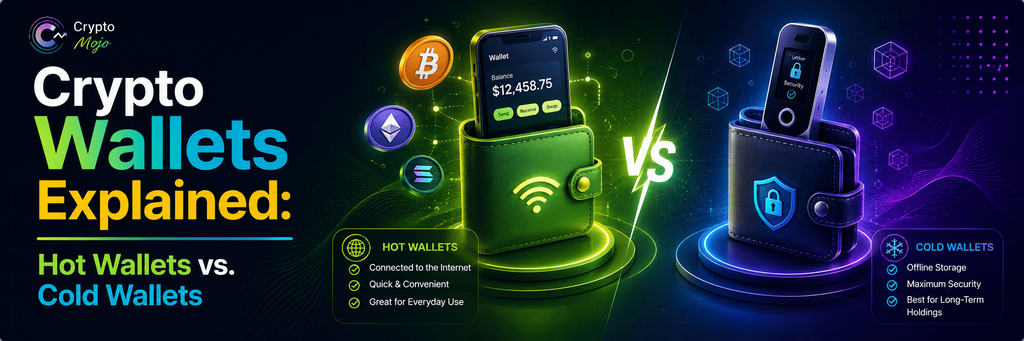
Crypto Wallets Explained: Hot Wallets vs. Cold Wallets
TL;DR
The short version
A hot wallet is linked to the internet making it suitable for everyday use, but also exposed to the internet. A cold wallet on the other hand keeps your private keys completely offline, making it difficult to hack, but may be inconvenient for regular transactions. Most crypto holders make use of both;a hot wallet for everyday use and a cold wallet for long term storage of crypto savings.
Hot and cold wallets are familiar terms for anyone in the crypto space. And regardless of what these terms may imply, they have nothing to do with temperature. Rather, they represent two different techniques that come with storing private keys, giving you authority over your crypto assets. One approach is centered on convenience, while the other prioritizes security.
It’s important to understand the technical difference between these two as it may have direct consequences to how vulnerable your crypto assets are to loss, theft of unauthorized access. Before buying any amount of cryptocurrency, it’s crucial to understand how these two storage mechanisms work, and their difference. And this article is your starting guide.
First things first
Before jumping into the details, it’s essential to clarify a common misconception: no, crypto doesn’t live inside your wallet. It lives on the blockchain as a record in a shared public ledger. The role of the wallet essentially is to safely store the private key, which is typically a piece of cryptographic info that verifies that a user has the right/privilege to move the crypto.
Hence, whoever is in control of the private key, is perceived as the owner who controls the funds. And this is the main reason why your method of storage truly matters
What Is a Hot Wallet?
A hot wallet is a crypto wallet that’s linked to the internet. This includes:
- Any mobile wallet apps
- Browser extension wallets
- Desktop wallet software
- Wallets incorporated in cryptocurrency exchanges
Hot wallets are built around convenience. Since they have access to the internet, a user can send, receive, and check balances in a matter of seconds. For active traders , people using DeFi apps, or frequently making purchases, a hot wallet tends to be the realistic choice, as cold storage isn’t ideal for frequent activities.
However, the compromise is exposure. With a hot wallet being online, it’s essentially accessible by anyone trying to hack into it remotely; via phishing attacks, malware, or vulnerabilities in the device or app itself.
This is not to mean that hot wallets are unsafe, but it means its security could be compromised. This shifts this accountability to you as the user: It’s your responsibility to ensure your device stays malware-free, with a strong password, and you should stay alert to phishing attempts.
What Is a Cold Wallet?
A cold wallet (cold storage) stores your private keys fully offline. The most regular form is a hardware wallet; usually a small physical device, with the size of a USB drive, exclusively built to produce and store private keys without exposure to an internet-connected device.
With a cold wallet never being connected to the internet during key generation or storage, there’s no path that exists for a hacker to reach it. To approve a transaction, the hardware wallet only connects briefly to a computer or phone, however the private key itself doesn’t leave the device..
Some users may be in favor of “paper wallets” as a form of cold storage. This involves physically writing down a private key or seed phrase on a paper and securing it in a safe location. This may work in principle but exposes one to certain risks such as physical damage, loss, or potentially making an error when copying the key by hand. This is if anything the major reason why hardware wallets have become the more suitable recommendation.
At its core, cold storage trades convenience for security. Users don’t have the privilege to trade or interact with DeFi apps while using cold storage. And this becomes ground for it not being an ideal storage approach for active trading, but fit for holding crypto longterm.
Detailed overview of Altcoins>>

Olav Nilsen Quick Tip ⚡
Think of hot wallets like the cash in your physical wallet. It’s useful for everyday use, but not ideal for long-term savings. Cold wallets emulate a safe deposit box; may be less convenient to access, but perfect for saving long term.
Custodial vs. Non-Custodial: A Related, Often Confused Concept
At its core, hot versus cold only portrays whether a wallet is online or offline. There’s an additional, distinction worth understanding too: custodial vs non-custodial.
A custodial wallet is one that a third party like an exchange holds your private keys on your behalf. In case you buy crypto on an exchange and leave it there, you’re employing a custodial setup. And this is convenient for many users as you’re not required to manage keys by yourself.
A non-custodial wallet is one that gives you the privilege to control your own private keys directly, despite whether that wallet is hot or cold. And this concept is where the phrase “not your keys, not your coins” emanates from. A non-custodial wallet means you have full independent control, but with full accountability if something goes wrong.
Most cold wallets are non-custodial by nature. Hot wallets in form of a mobile app that you’ve setup personally are typically non-custodial. On the other hand, leaving crypto assets on an exchange is custodial, even with the exchange being “hot” from a connectivity perspective.
Blockchain technology full guide>>
Comparing Hot and Cold Wallets Side by Side
- Convenience: Hot wallets come with various perks. Fast access for trading, spending, and interacting with other crypto apps. Cold wallets need extra steps and aren’t ideal for regular use.
- Security from remote attacks: Cold wallets come with an extra advantage, as there’s no direct online path to the private key. Hot wallets are more prone to security risks such as malware, phishing, and remote exploits.
- Cost: Hot wallets (software-based) are free by design. Cold wallets (hardware devices) usually cost somewhere between $50 and $200. This will depend on the brand and the features it comes with.
- Best suited for: Hot wallets are ideal for smaller, active balances used for trading or frequent daily transactions. Cold wallets are ideal to hold large amounts intended for long-term holding.
- Risk of physical loss: Cold wallets come with a different level of risk. In case one loses or damages the physical device, without having any backups it means permanently loss of access. Hot wallets don’t face this risk, but may be exposed to digital theft instead.
A Common (and Reasonable) Approach: Use Both
Most seasoned crypto users don’t approach this as an either/or decision. A good setup looks takes this shape:
- Have a modest amount in a hot wallet for daily use such as; trading, spending, or using on other apps
- Store large amounts, or anything that’s intended for long-term holding, into a cold wallet
This approach emulates how most people deal with traditional money; keeping a particular amount of cash in a wallet for daily spending, while the rest of it sits in a savings account, more secure and less accessible. Employing this same logic to crypto is a realistic, low-effort strategy to reduce overall risk.
Full Overview of Stablecoins>>
Olav Nilsen Quick Tip ⚡
Imagine a specific amount of crypto sitting in a hot wallet and picture it being gone tomorrow due to a security breach or malware. If that amount would be very painful to lose, then it signals that those assets should be in a cold storage instead.
Common Mistakes to Avoid With Either Type
- Storing your seed phrase digitally. Do not be tempted to store your seed phrase at a digital location, whether it’s a screenshot, email draft or note app. You should write it down physically and store it in a secure place.
- Buying a hardware wallet from an unofficial third-party seller. Hardware wallets need to be bought directly from the manufacturer or an official retailer. Devices that are secondhand or from unverified marketplaces come with the risk of having being tampered with before you make use of them.
- Assuming an exchange balance is the same as owning crypto directly. In case your crypto assets are sitting in a custodial exchange wallet, you essentially don’t have the privilege of direct control as with a non-custodial hot or cold wallet. There’s nothing wrong with this for modest, active trading amounts, but it’s something you should be aware of.
- Never testing your backup. In case you’ve physically written down a seed phrase, ensure that you can actually recover a wallet using it, instead of assuming your backup process worked and discovering otherwise during an emergency.
- Keeping all your eggs in one basket. For larger holdings, experts recommend splitting funds across more than one wallet or storage method. This reduces the consequences if a security breach occurs.
How to Choose What’s Right for You
Ultimately, there’s no right setup. This is only determined by how you make use of your crypto. A few factors to consider:
- How often do you practically need to access or move the crypto funds?
- What would be the impact, financially or emotionally, in case you lost this specific amount?
- Are you okay with the extra responsibility that’s needed when managing your own private keys?
- Do you own a safe, dependable physical location to store a hardware wallet and a backup seed phrase?
If you’re a beginner in crypto and only holding a modest amount, it’s ideal to start with a hot wallet. Nevertheless as your holdings keep on growing, you should consider a long-term storage. And this is where cold storage comes into play.
Frequently Asked Questions
- Is a hot wallet unsafe to use at all? Not essentially. There are millions of users who hold crypto funds in hot wallets securely every day. The risk inherently comes from how they’re used: weak passwords, falling prey to phishing attempts, or holding incredibly large amounts in an active connected wallet. Ultimately, hot wallets are a sensible and typical part of most crypto holders’ setup.
- What happens if I lose my hardware wallet? Provided that you have backed up your seed phrase safely, losing the hardware device won’t be disastrous. You can easily make use of the seed phrase to restore your wallet on another new device. But in an instance that you lose both the seed phrase and device, the funds won’t be recoverable.
- Can a cold wallet be hacked remotely? Since a cold wallet’s private key isn’t connected to the internet, it’s beyond difficult to compromise remotely, which is the main advantage of cold storage. There’s still the potential to lose funds via other means, such as physical theft of the device or user error that may happen during setup or recovery.
- Do I need a hardware wallet if I only own a small amount of crypto? Not necessarily. Hardware wallets are the best choice when your holdings reach an amount where the added security significantly outweighs the extra cost and inconvenience. But for modest amounts, used, a reputable hot wallet is ideal.
- Are all hot wallets custodial? No. Many hot wallets, like self-managed mobile or browser wallets, are non-custodial, which typically means you get to control the private keys directly. Custodial wallets particularly refer to instances where a third party, like an exchange, holds those keys on your behalf.
Conclusion
Hot and cold wallets are different tools designed for different roles. Hot wallets focus on convenience and are ideal for smaller, active balances. Cold wallets prioritize security and are designed for holding bigger amounts for long-term savings. Understanding this difference, and being intentional with which one suits a given amount of crypto, is one of the simplest and most important steps you can undertake to safeguard your crypto funds.
Last edited: 8/6/2026
Olav Nilsen
Editor-in-Chief at Crypto Mojo
Olav Nilsen is Editor-in-Chief at Crypto Mojo. He simplifies crypto and blockchain topics so readers can make smarter financial decisions, cutting through the noise with actionable insights for every trader.
This article is for educational purposes only and does not constitute financial, investment, or tax advice. Cryptocurrency involves significant risk, including the potential for permanent and irreversible loss of funds. Always conduct your own research and consult a licensed financial professional before making investment decisions.